Medical Cable Failure Prevention: Strategies for Reducing Equipment Downtime
Medical cable failures disrupt patient monitoring, create workflow delays, and increase staff workload. While cables are often viewed as disposable accessories, preventable failures account for significant equipment downtime in hospitals.
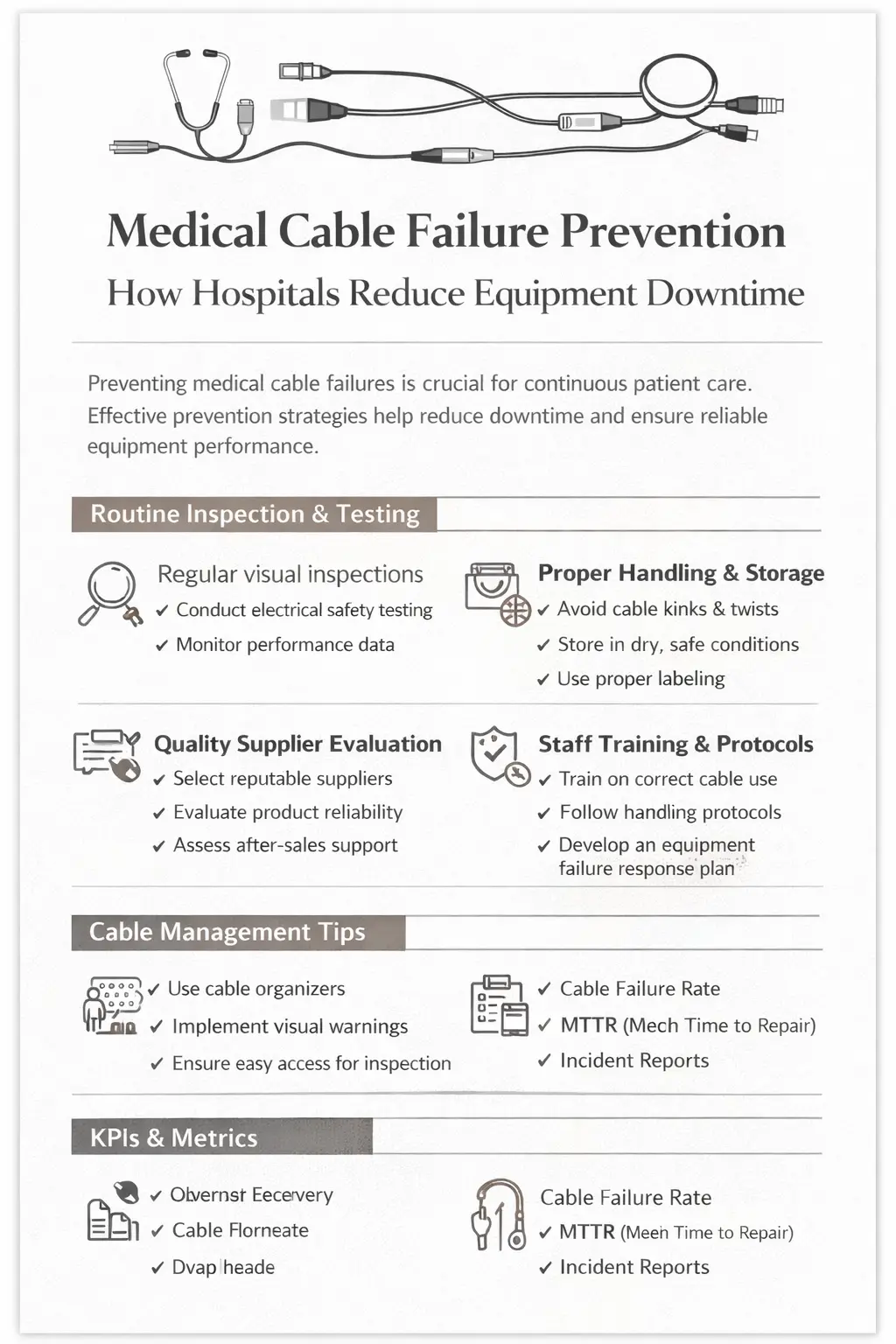
Effective failure prevention strategies—including early detection, preventive maintenance, quality cable selection, and replacement planning—help biomedical teams reduce unplanned downtime and improve monitoring reliability.
This guide explains how hospitals can prevent common cable failures and reduce the operational impact when failures do occur.
Supplier partners that provide high-quality medical cables and failure prevention support help hospitals minimize equipment downtime and improve clinical workflows.
Common Causes of Medical Cable Failures
Understanding why cables fail is the first step in prevention.
Primary Failure Modes
- Connector Wear and Damage
- Repeated insertion/removal cycles stress connector pins
- Bent pins prevent proper electrical contact
- Cracked or broken connector housings
- Corrosion from cleaning solutions or moisture exposure
- Cable Strain and Flexing
- Repeated bending at connection points weakens internal wires
- Improper cable management creates stress points
- Heavy equipment movement damages cables
- Insufficient strain relief at connectors
- Physical Damage
- Cables trapped in bed mechanisms or equipment wheels
- Accidental cuts or punctures
- Crushing from equipment or furniture
- Damage during cleaning or room turnover
- Chemical Degradation
- Harsh cleaning solutions damage cable insulation
- Repeated exposure to alcohol- or bleach-based cleaners
- Improper disinfection methods accelerate material breakdown
- Manufacturing Quality Issues
- Substandard materials or poor manufacturing processes
- Inadequate quality control during production
- Counterfeit or gray-market cables with inferior components
Most cable failures are preventable through better quality selection, proper handling, and proactive replacement strategies.
Early Failure Detection
Identifying cables at risk of failure before they cause monitoring interruptions reduces unplanned downtime.
Warning Signs of Impending Failure
Visual indicators:
- Frayed or damaged cable insulation
- Cracked or discolored connectors
- Exposed internal wires
- Bent or misshapen connector pins
- Discoloration or brittleness near stress points
Performance indicators:
- Intermittent signal loss during patient monitoring
- Poor signal quality or excessive noise
- Connections that require repositioning to work
- Loose-fitting connectors
- Alarms triggered by signal dropout
Usage history:
- Cables used beyond recommended lifespan
- High-use department cables (ICU, ED, telemetry)
- Cables with history of prior repairs or issues
- Cables purchased from unreliable sources
Biomedical teams should implement regular cable inspection protocols to identify at-risk cables before failures occur.
Preventive Maintenance Strategies
Proactive cable management reduces unplanned failures.
Preventive Maintenance Best Practices
- Regular Inspection Schedules
- Monthly visual inspections in high-use departments (ICU, telemetry, ED)
- Quarterly inspections for lower-use areas
- Document inspection findings and cable condition
- Remove damaged cables immediately
- Proper Cleaning Protocols
- Use manufacturer-approved cleaning solutions only
- Avoid harsh chemicals that degrade cable materials
- Follow recommended disinfection procedures
- Allow proper drying time before use
- Cable Handling Training
- Train clinical staff on proper cable connection/disconnection techniques
- Emphasize gentle handling and strain relief awareness
- Demonstrate proper cable coiling and storage methods
- Educate staff on signs of cable damage
- Environmental Protection
- Store cables in dry, clean environments
- Avoid excessive heat or cold exposure
- Keep cables away from sharp equipment edges
- Use cable management systems to prevent tangling
- Usage Tracking
- Document cable purchase dates and expected lifespans
- Track failure rates by cable type and manufacturer
- Rotate stock to ensure even usage
- Replace cables proactively based on age and usage
Preventive maintenance reduces emergency replacements and improves budget predictability.
Quality Cable Selection Reduces Failures
Not all medical cables are manufactured to the same standards. Quality differences directly impact failure rates.
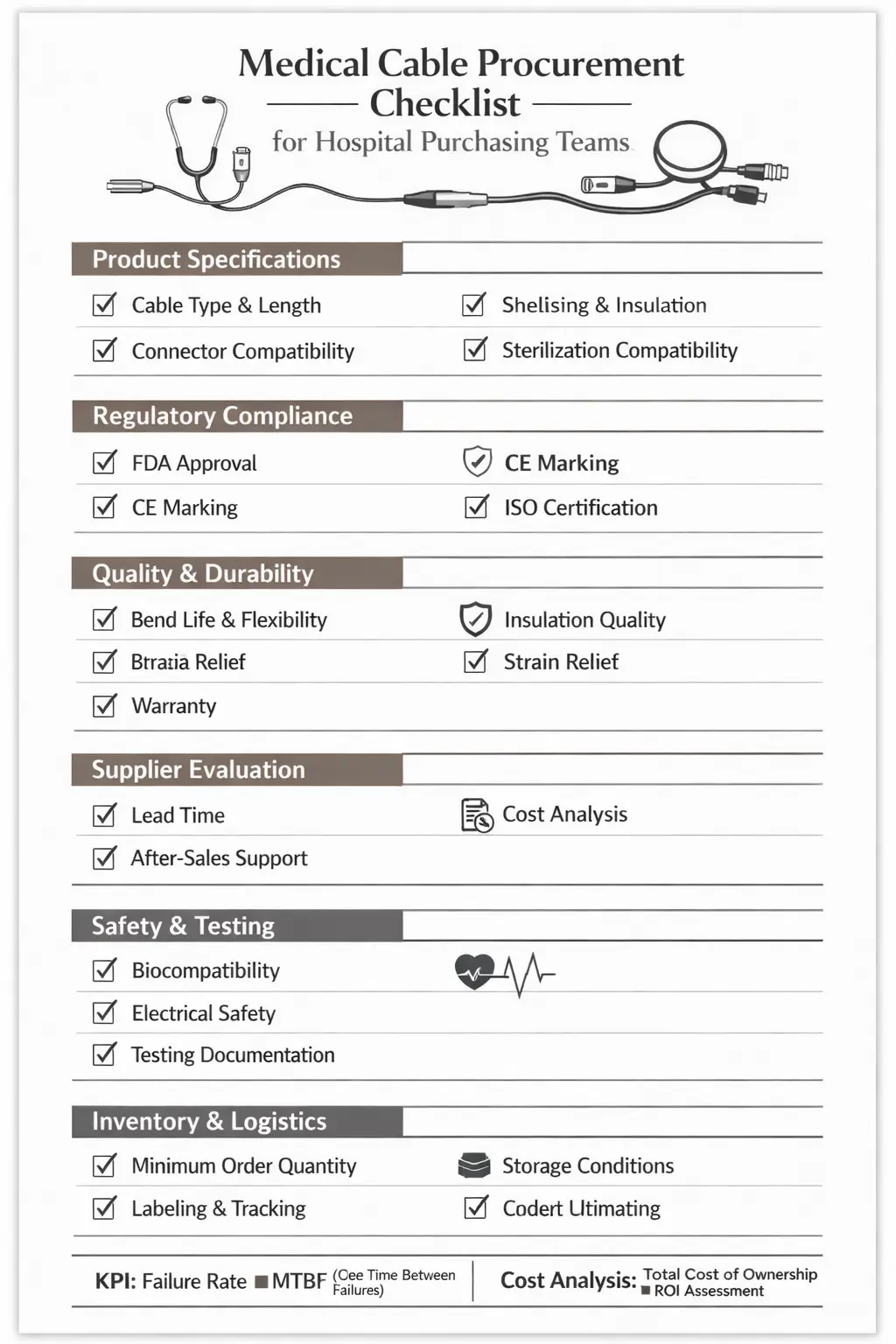
Quality Indicators to Verify
Manufacturing standards:
- ✓ OEM-grade manufacturing: Cables manufactured to original equipment specifications reduce failure risk
- ✓ ISO 13485 certification: Quality management systems ensure consistent manufacturing processes
- ✓ FDA 510(k) clearance: Regulatory approval demonstrates safety and performance standards (where applicable)
- ✓ CE certification: European compliance standards support quality expectations (where applicable)
Material quality:
- ✓ Medical-grade materials: Hospital-appropriate insulation and jacketing
- ✓ Strain relief: Adequate strain relief at connectors prevents internal wire breakage
- ✓ Connector quality: Durable, corrosion-resistant connectors
- ✓ Cable flexibility: Appropriate flexibility for clinical use without excessive stiffness
Performance testing:
- ✓ Electrical performance: Verified signal transmission quality
- ✓ Durability testing: Flex cycle testing, connector insertion/removal testing
- ✓ Biocompatibility: Materials safe for patient contact (if applicable)
Investing in higher-quality cables reduces failure rates and total cost of ownership.
Suppliers that source OEM-grade cables from ISO 13485–certified manufacturers help hospitals reduce failure-related downtime and replacement costs.
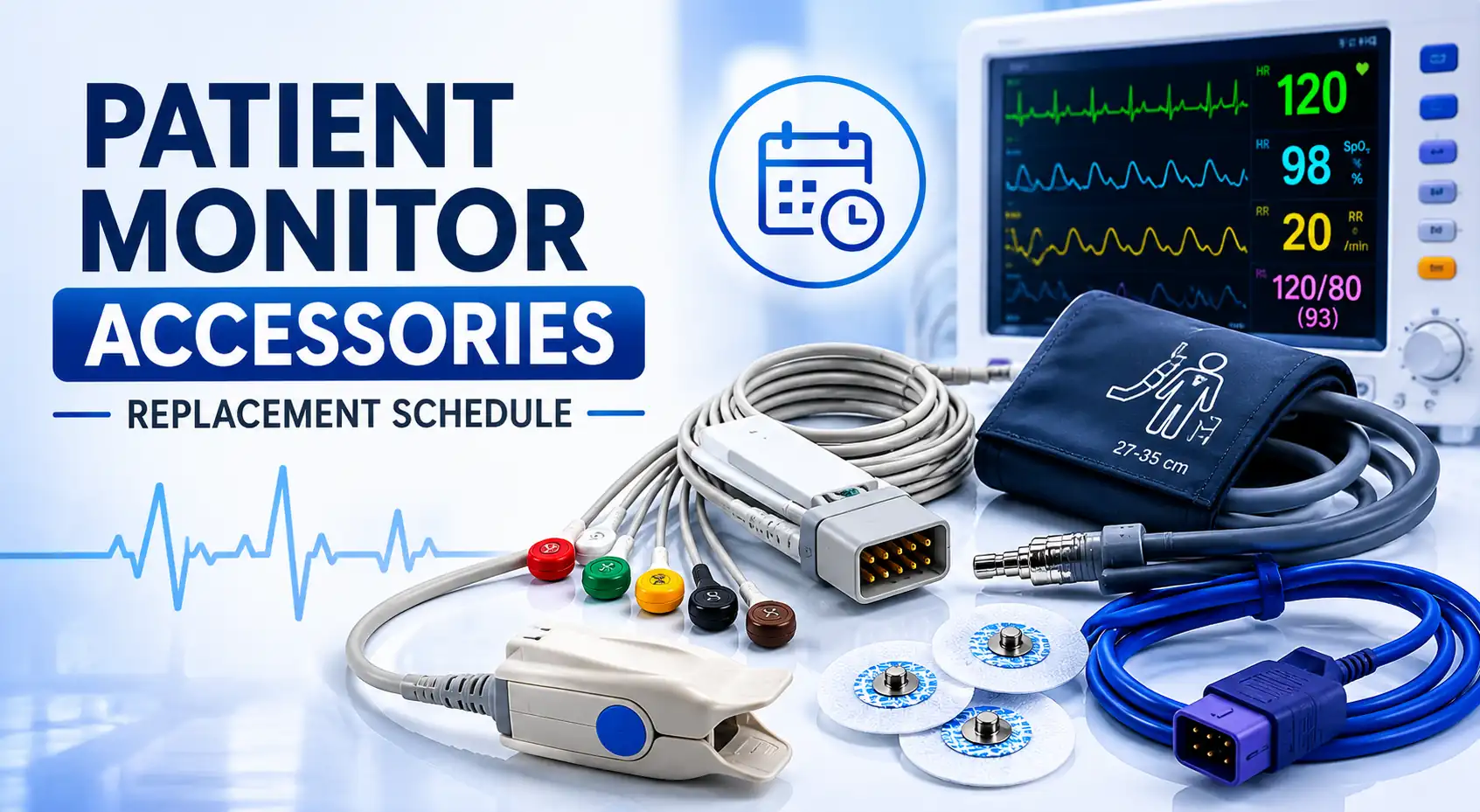
Replacement Planning and Lifecycle Management
Proactive replacement strategies prevent failures before they occur.
Cable Lifecycle Management Framework
- Establish Expected Lifespans
- Document typical cable lifespan by type and usage environment
- High-use departments (ICU, telemetry): 12–18 months
- Moderate-use departments (step-down, general med-surg): 18–24 months
- Low-use departments (outpatient, rehab): 24–36 months
- Implement Replacement Triggers
- Replace cables reaching end of expected lifespan
- Remove cables showing visible wear or damage
- Replace cables with history of intermittent issues
- Retire cables after equipment upgrades or replacements
- Maintain Replacement Inventory
- Stock 2–3 units of high-failure cables for immediate replacement
- Reorder before inventory reaches minimum levels
- Plan bulk replacement cycles for budget efficiency
- Coordinate with supplier lead times
- Track Failure Patterns
- Document failure rates by cable type, manufacturer, department
- Identify cables with shorter-than-expected lifespans
- Use data to inform future purchasing decisions
- Share failure data with suppliers to drive quality improvements
- Budget for Replacement Cycles
- Build cable replacement into annual capital budgets
- Plan for both routine and emergency replacements
- Allocate 10–15% buffer for unexpected failures
- Consider extended warranties or supplier guarantees
Hospitals that implement lifecycle management reduce emergency orders and improve budget predictability.
Reducing Downtime When Failures Occur
Even with prevention strategies, failures will occur. Minimizing downtime requires preparation.
Downtime Reduction Strategies
- Maintain Emergency Stock
- Keep 2–3 units of critical cables on hand
- Store in accessible locations (biomedical shop, ICU, ED)
- Rotate stock to prevent aging inventory
- Establish Rapid Replacement Procedures
- Document internal approval workflows for emergency orders
- Pre-approve emergency purchasing authorities
- Maintain supplier relationships for expedited ordering
- Use company credit accounts to avoid PO delays
- Cross-Train Staff
- Train clinical staff to identify failed cables
- Educate staff on proper temporary workarounds (when safe)
- Ensure biomedical team knows emergency supplier contacts
- Temporary Equipment Sharing
- Identify compatible cables across departments
- Establish temporary loan protocols
- Document cable borrowing to ensure returns
- Supplier Partnerships
- Work with suppliers offering same-day or next-day shipping
- Establish expedited ordering accounts
- Confirm which cables are typically in stock
- Maintain backup supplier relationships
Rapid replacement processes minimize monitoring interruptions and workflow disruptions.
Suppliers that provide emergency order capabilities and same-day shipping options help hospitals maintain clinical operations during cable failures.
Cost Impact of Cable Failures
Cable failures create both direct and indirect costs:
Failure Cost Breakdown
| Cost Category | Impact |
|---|---|
| Replacement Cables | Unplanned emergency orders (often at premium pricing) |
| Staff Time | Troubleshooting, reordering, equipment testing |
| Equipment Downtime | Delayed procedures, workflow disruptions |
| Clinical Impact | Interrupted patient monitoring, delayed care |
| Patient Satisfaction | Equipment issues visible to patients/families |
| Warranty Risks | Low-quality cables may damage equipment |
Preventive strategies reduce total failure-related costs while improving reliability.
Medical Cable Failure Prevention Checklist
| Prevention Strategy | Implementation |
|---|---|
| Quality Selection | Purchase OEM-grade cables from verified manufacturers |
| Regular Inspections | Monthly visual inspections in high-use departments |
| Proper Cleaning | Use manufacturer-approved cleaning solutions only |
| Staff Training | Train clinical staff on proper cable handling |
| Lifecycle Tracking | Document cable age, usage, and expected lifespan |
| Proactive Replacement | Replace cables reaching end of expected lifespan |
| Emergency Stock | Maintain 2–3 units of critical cables on hand |
| Failure Tracking | Document failure rates to inform future purchases |
Final Thoughts
Medical cable failures are largely preventable through quality selection, regular inspections, proper maintenance, and proactive replacement planning. By implementing systematic failure prevention strategies, biomedical teams reduce unplanned downtime, improve monitoring reliability, and lower total cost of ownership.
Working with suppliers that provide high-quality OEM-grade cables, emergency order capabilities, and lifecycle management support helps hospitals minimize cable-related equipment downtime and operational disruptions. Learn more on Why Choose Medten.
Frequently Asked Questions
What are the most common causes of medical cable failures?
Common causes include connector wear from repeated use, cable strain from improper handling, physical damage from equipment movement, chemical degradation from harsh cleaning solutions, and low manufacturing quality.
How can hospitals detect cable failures before they cause monitoring interruptions?
Hospitals can detect early failures through regular visual inspections (looking for frayed insulation, cracked connectors, bent pins), monitoring for intermittent signal issues, and tracking cables that have exceeded expected lifespans.
What is the typical lifespan of medical cables?
Cable lifespan varies by usage. High-use departments (ICU, telemetry) typically see 12–18 months. Moderate-use areas may get 18–24 months. Low-use areas can see 24–36 months. Quality and handling practices affect actual lifespan.
How does cable quality affect failure rates?
High-quality OEM-grade cables manufactured to ISO 13485 standards typically have lower failure rates, better strain relief, more durable connectors, and longer lifespans compared to lower-quality alternatives.
What preventive maintenance should hospitals perform on medical cables?
Hospitals should perform monthly visual inspections in high-use areas, use manufacturer-approved cleaning solutions, train staff on proper handling, store cables properly, and track cable age to plan proactive replacements.
How can hospitals reduce equipment downtime when cable failures occur?
Hospitals reduce downtime by maintaining emergency stock (2–3 units of critical cables), establishing rapid replacement procedures, pre-approving emergency purchasing authority, and working with suppliers that offer same-day shipping.
Why should hospitals track medical cable failure rates?
Tracking failure rates by cable type, manufacturer, and department helps hospitals identify problematic products, inform future purchasing decisions, plan replacement budgets, and share data with suppliers to drive quality improvements.