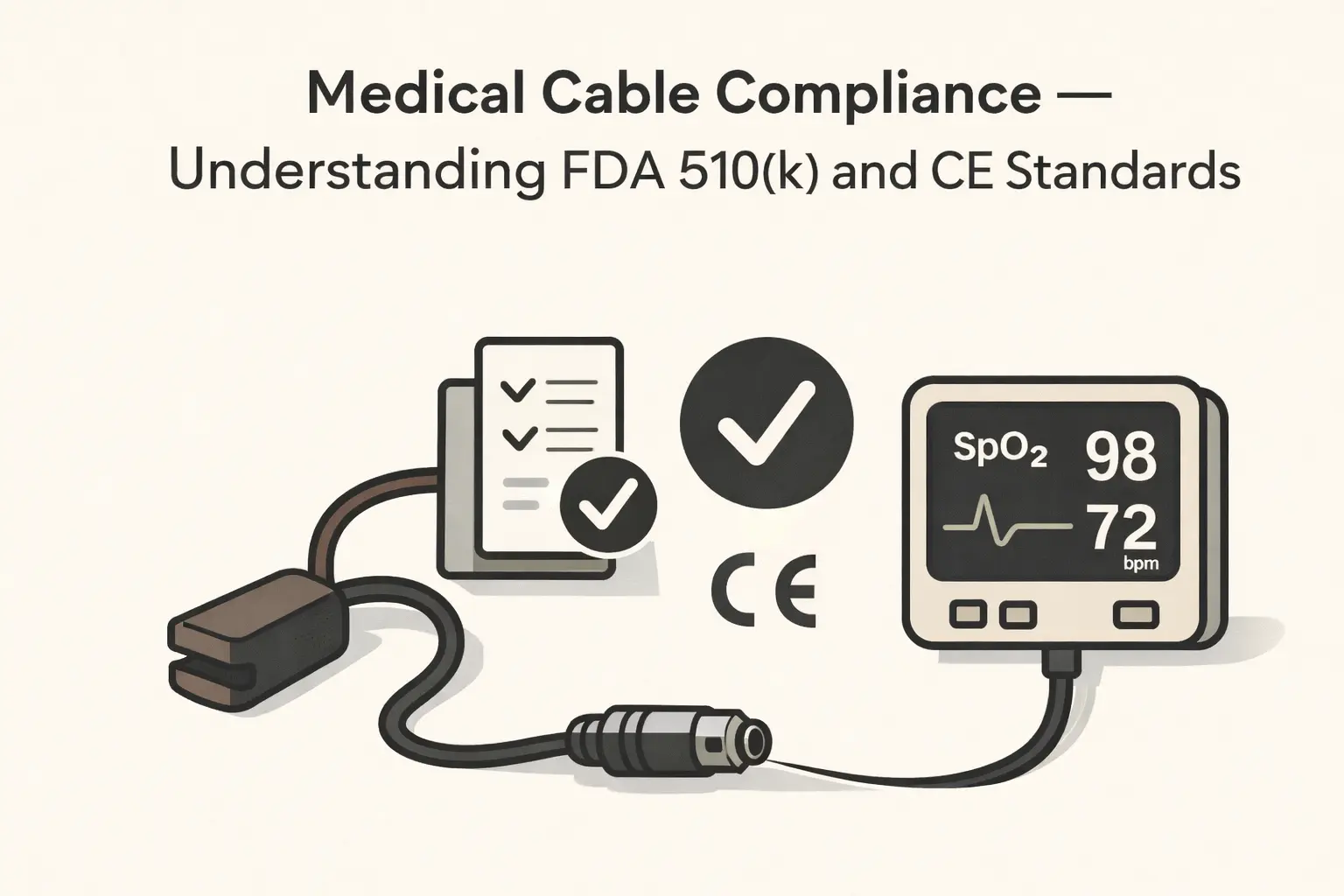
Medical Cable Compliance: What Hospitals Need to Know
Compliance standards help ensure that medical cables used in patient monitoring meet established safety and performance requirements. Procurement teams rely on regulatory documentation to reduce risk, support internal approvals, and maintain audit readiness.
Suppliers that support hospitals with regulatory-compliant medical cable sourcing and documentation play a critical role in reducing procurement risk and approval delays by providing access to manufacturer-issued compliance records.
FDA 510(k) Clearance
FDA 510(k) clearance confirms that a medical device is substantially equivalent to a legally marketed product and meets applicable U.S. safety and performance requirements. For medical cables and accessories, this clearance is issued to the manufacturer of the device.
Hospitals typically verify:
- Clearance status of the product
- Intended use alignment with clinical applications
- Supporting documentation issued by the manufacturer
Because suppliers are not usually the clearance holders themselves, hospitals often rely on suppliers to consolidate FDA 510(k) documentation across multiple cable manufacturers, simplifying internal review and procurement workflows.
Suppliers that provide organized FDA 510(k) documentation help streamline compliance verification.
CE Certification Explained
CE marking indicates that a medical device complies with European health, safety, and environmental requirements under applicable EU regulations. Like FDA clearance, CE certification is issued by or on behalf of the manufacturer.
CE certification supports:
- International procurement
- Global equipment compatibility
- Regulatory audits in EU and non-EU markets
Suppliers that offer CE-marked medical cables for international compatibility help hospitals standardize sourcing across regions while maintaining regulatory alignment.
Why Documentation & Traceability Matter
Clear, accessible documentation:
- Accelerates procurement approvals
- Supports compliance audits
- Reduces institutional and legal risk
Suppliers without transparent documentation processes may delay purchasing decisions or increase compliance burden for hospital teams.
Compliance Evaluation Checklist
| Requirement | Purpose |
|---|---|
| FDA Clearance (where applicable) | U.S. regulatory alignment |
| CE Certification (where applicable) | International compliance |
| Documentation Access | Audit readiness |
| Traceability Records | Quality assurance |
Final Thoughts
Medical cable compliance protects patients, clinicians, and healthcare institutions. Working with a sourcing partner that provides transparent, manufacturer-issued regulatory documentation helps hospitals streamline procurement and reduce compliance risk.
Explore Medten's medical cable sourcing solutions or contact our team for assistance with compliance verification and documentation support.
Frequently Asked Questions
What is FDA 510(k) clearance for medical cables?
FDA 510(k) clearance indicates that a medical cable or accessory is substantially equivalent to a legally marketed device and meets U.S. safety and performance requirements. Hospitals use this clearance to verify regulatory compliance during procurement.
Are all medical cables required to have FDA 510(k) clearance?
Not all medical cable accessories require FDA clearance. However, hospitals typically prefer suppliers that can provide manufacturer-issued documentation demonstrating regulatory alignment.
What does CE certification mean for medical cables?
CE certification confirms that a medical cable meets European health, safety, and environmental standards and supports international procurement and regulatory audits.
Is CE certification required for medical cables used in the United States?
CE certification is not required for use in the U.S., but it signals global compliance and is often valued by hospitals sourcing internationally compatible equipment.
Why is regulatory documentation important in medical cable procurement?
Clear documentation accelerates approvals, supports audits, and reduces institutional risk. Suppliers that provide organized compliance records simplify procurement workflows.
How do hospitals verify medical cable compliance?
Hospitals review clearance status, intended use alignment, certification records, and traceability documentation supplied by the manufacturer and provided by the sourcing partner.
Does compliance documentation affect supplier selection?
Yes. Suppliers that provide complete, transparent regulatory documentation are often preferred because they reduce approval delays and long-term compliance risk.