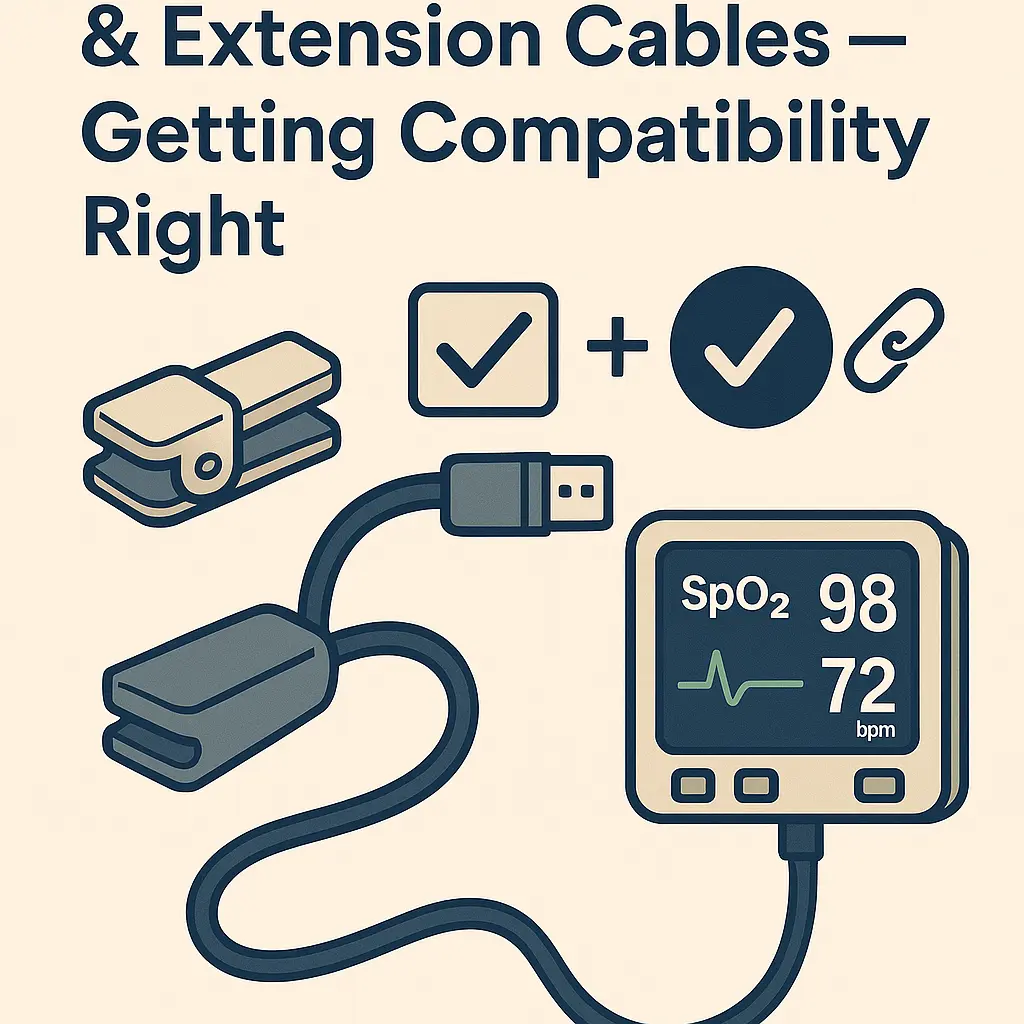
Introduction: The Foundation of Reliable Oxygen Monitoring
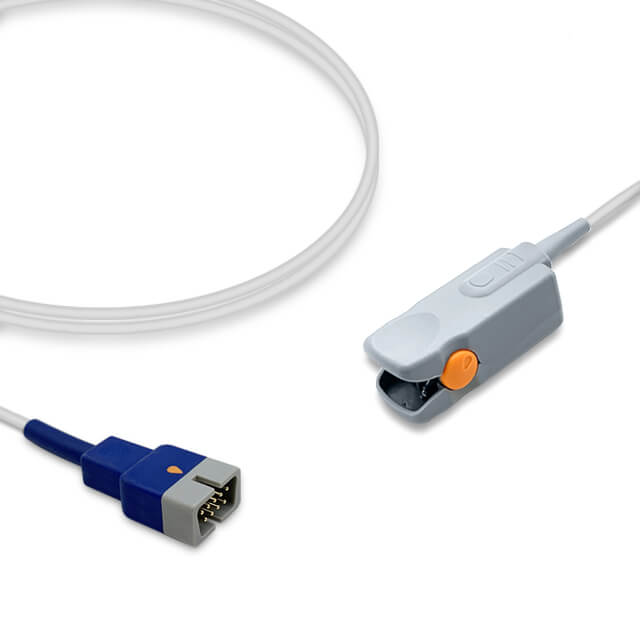
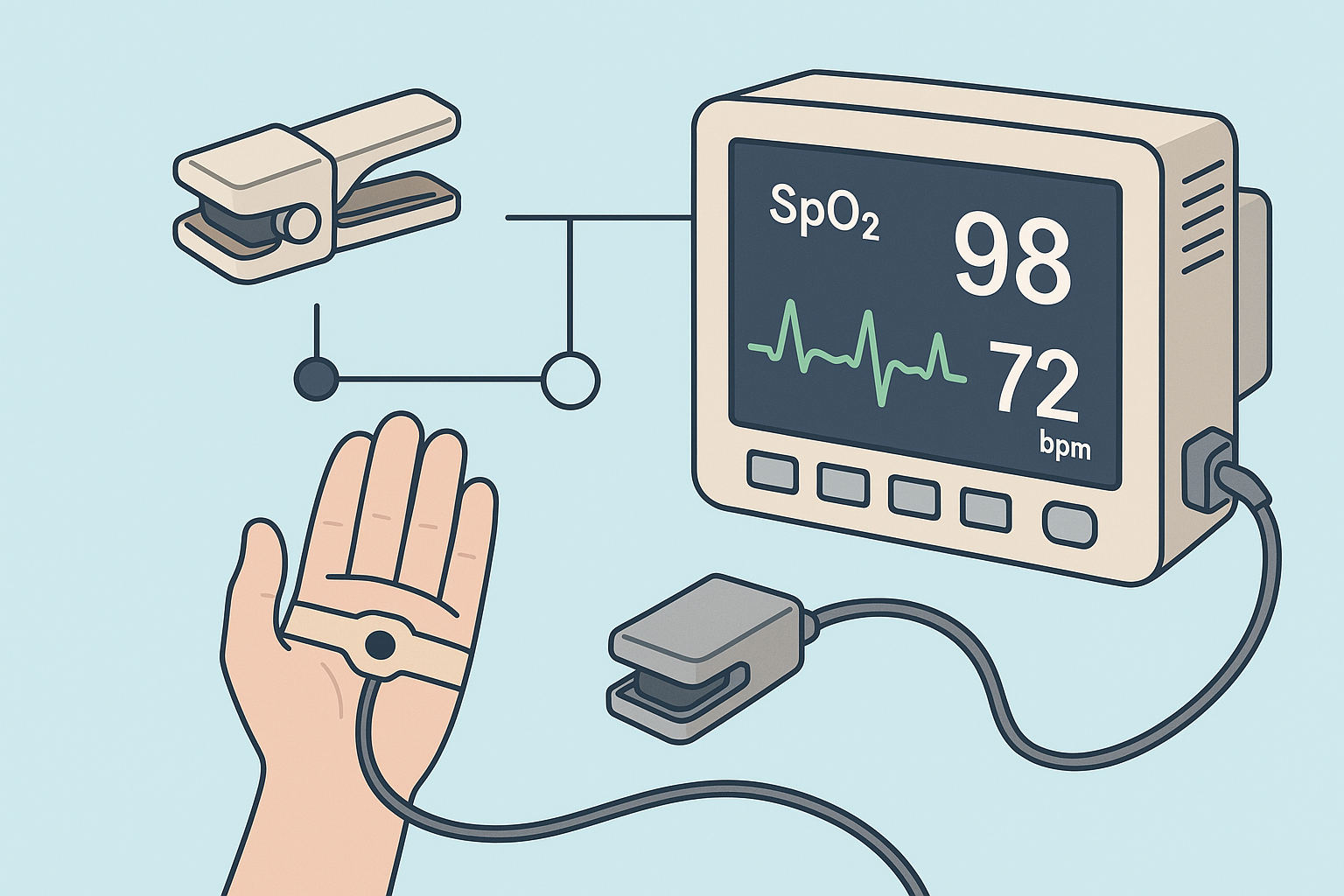
Accurate oxygen monitoring depends on a reliable connection between the patient, sensor, and monitor. But with so many connector types, cable lengths, and design variations, ordering the right SpO₂ accessories can feel complex. This guide simplifies that process by explaining type designations, connector codes, and the small details that make a big difference in day-to-day performance.
Why Compatibility Matters
Each SpO₂ monitor brand uses proprietary connectors and wiring standards. A cable that looks similar may have a completely different pin configuration.
Using the wrong sensor or extension can result in inaccurate readings—or worse, no signal at all.
Medten distributes sensors and extensions designed to meet these brand-specific configurations, ensuring dependable readings and longer cable life.
How to Read Type Designations
Each SpO₂ accessory includes a short type code that summarizes its design:
- S — SpO₂
- A / L / S — Length indicator: Adapter (1 ft), Long (8 ft / 2.4 m), Short (4 ft / 1.2 m)
- Brand Codes: NE (Nellcor), PH (Philips), NI (Nihon Kohden), OH (Ohmeda), MA (Masimo), BC (BCI), HY (Novametrix)
When reviewing specifications, match both the brand code and length code to your existing monitor setup.
Connector Types Explained
Different monitor brands use distinct connector shapes and locking mechanisms.
Here's a simplified guide:
| Code | Brand | Connector Type |
|---|---|---|
| NE | Nellcor | 9-pin D-style |
| PH | Philips | Round keyed |
| NI | Nihon Kohden | Rectangular |
| MA | Masimo | Smooth-edge keyed |
| BC | BCI | Compact 6-pin |
| OH | Ohmeda | Metal bayonet |
Choosing the right connector type ensures a secure fit, reduces downtime, and maintains a steady signal.
Selecting the Right Length & Design
Cable length influences usability and wear:
- Short (4 ft / 1.2 m): Ideal for mobile or outpatient monitoring.
- Long (8 ft / 2.4 m): Best for bedside and ICU setups.
- Adapter (1 ft): Used to connect third-party sensors to OEM monitors.
Durability also depends on strain relief and outer jacket design. Look for flexible, smooth surfaces that resist kinking and are easy to clean.
Cleaning, Reuse & Maintenance
To maintain hygiene and performance:
- Use non-corrosive disinfectants after each use.
- Avoid alcohol-based cleaners that degrade plastic.
- Visually inspect strain relief areas and connectors.
- Replace sensors showing yellowing, cracks, or signal dropouts.
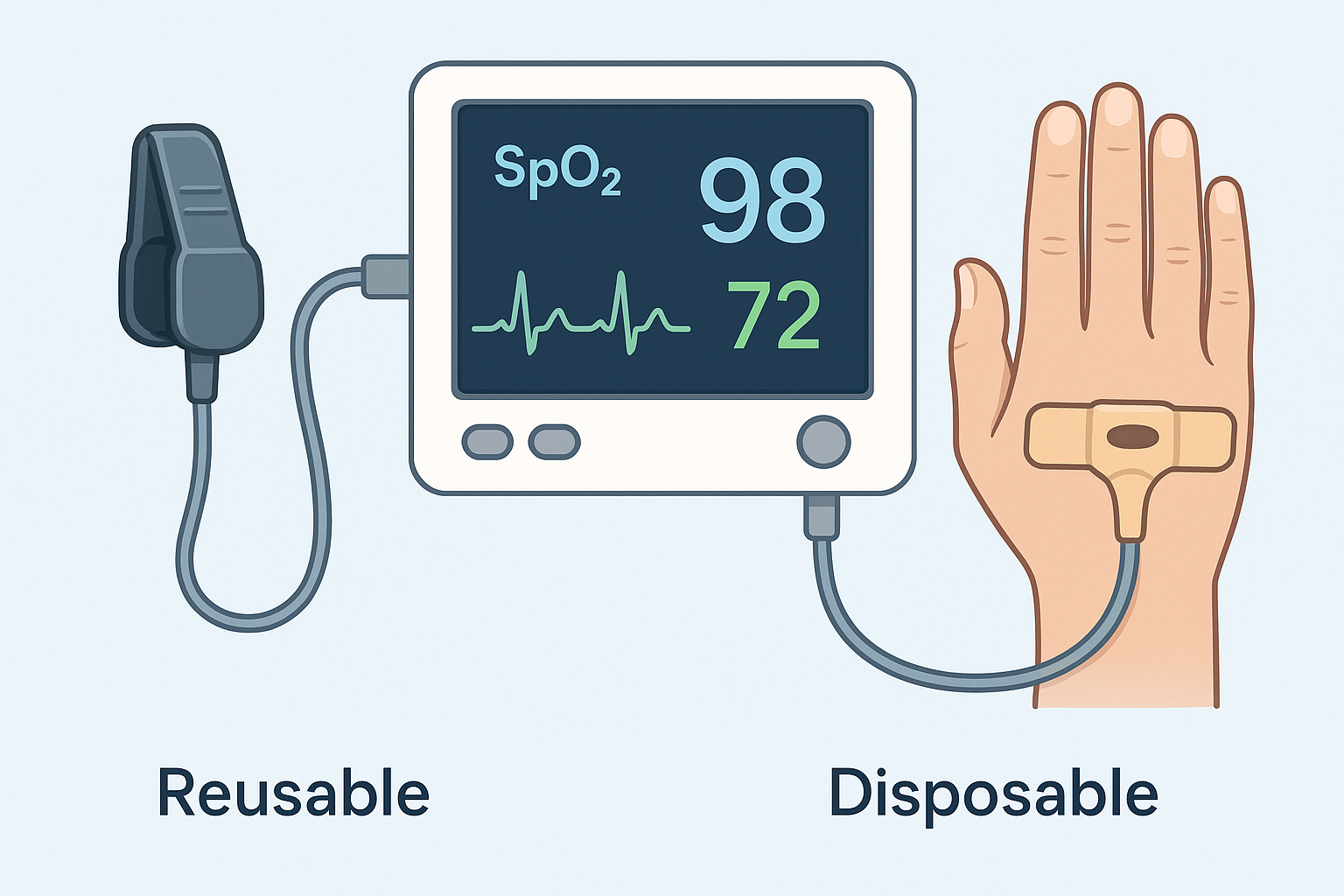
Reusable cables can deliver long service life with proper care and coiling.
Standardizing for Efficiency
Hospitals and clinics often manage multiple monitor brands across departments. Standardizing sensors and extensions wherever possible simplifies procurement, reduces training time, and minimizes downtime during replacements.
Medten's catalog organizes SpO₂ sensors and extensions by brand and connector code, so sourcing is quick and reliable.
Procurement Checklist
| Step | Detail |
|---|---|
| 1 | Identify monitor brand (Philips, Nihon Kohden, Masimo, etc.) |
| 2 | Match connector code (PH, NI, MA, etc.) |
| 3 | Choose cable length (A = 1 ft / S = 4 ft / L = 8 ft) |
| 4 | Confirm labeling and strain relief |
| 5 | Document replacement interval |
Final Thoughts
Reliable oxygen monitoring begins with choosing the right connection. Matching connector codes, standardizing cable lengths, and following maintenance best practices help ensure consistent readings and longer product life.
Explore compatible SpO₂ sensors and extension cables on Medten's catalog or contact us for assistance with cross-brand compatibility.