Introduction
Pulse oximetry is one of the most widely used monitoring tools in modern healthcare. From the ICU to the OR, and even during emergency transport, the ability to measure a patient's oxygen saturation (SpO₂) in real time is essential for safe care. At the heart of this technology lies the sensor — the small but critical accessory that sits between patient and monitor.
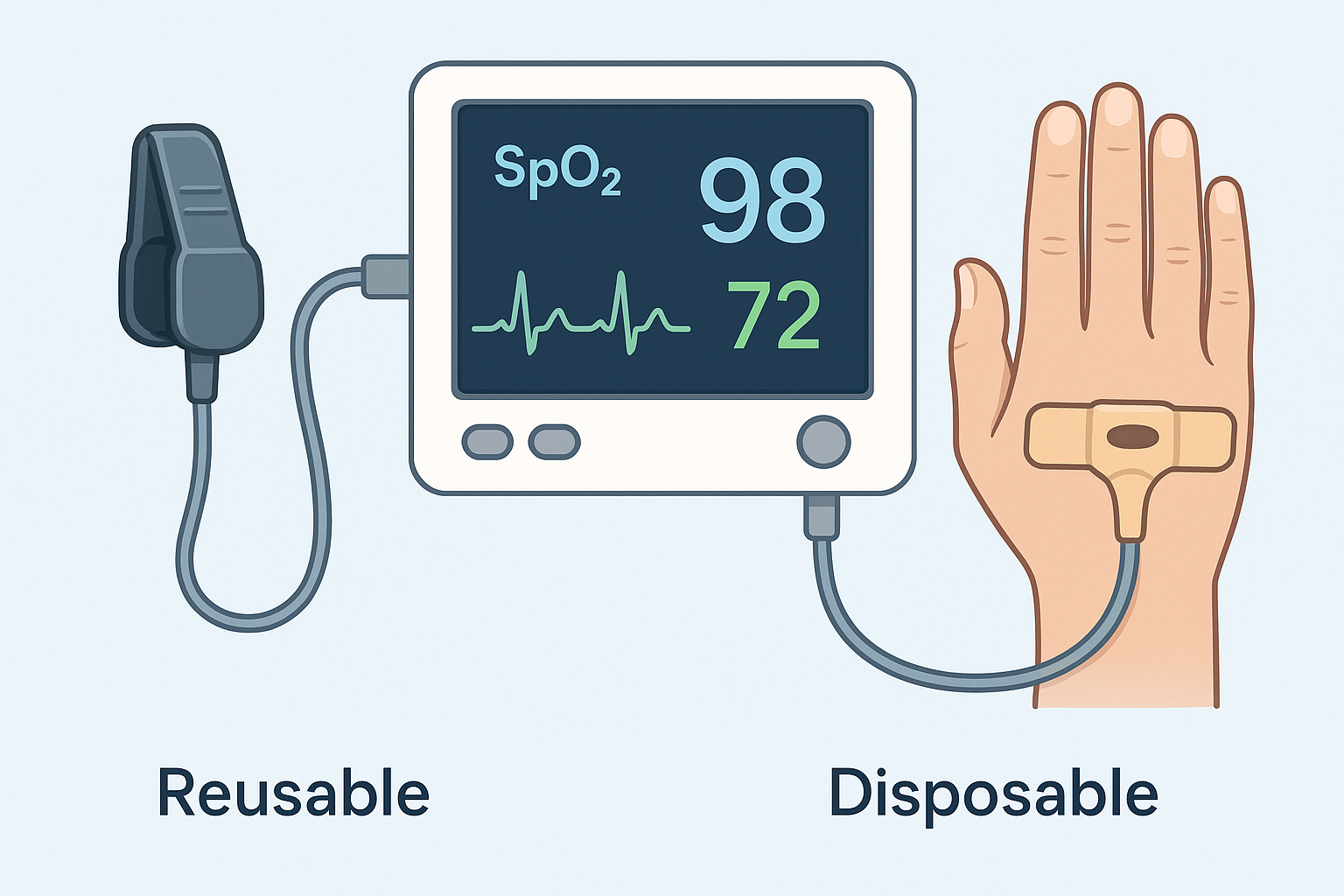
Hospitals and health systems face an important choice: should they rely primarily on reusable SpO₂ sensors, designed to be cleaned and cycled through patients, or disposable sensors, which are intended for single-patient use? Each approach has clear strengths and drawbacks. The wrong choice can create unnecessary costs, infection risks, or inaccurate readings, while the right approach can improve patient outcomes and operational efficiency.
This post explores the advantages and limitations of reusable and disposable SpO₂ sensors, highlights the contexts where each is most appropriate, and provides practical guidance for clinical and procurement teams making this decision.
Why the Sensor Choice Matters
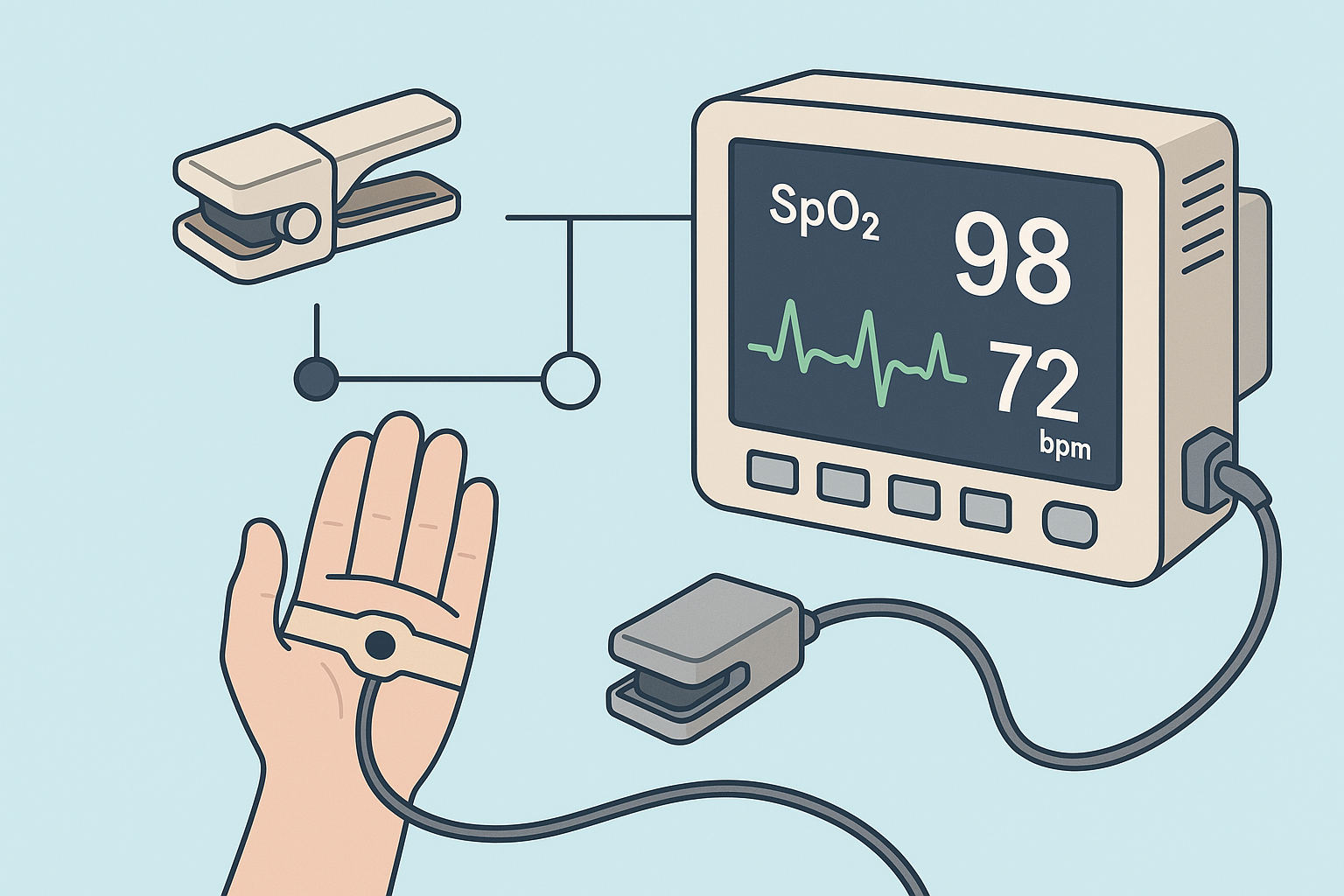
Pulse oximeters estimate oxygen saturation by passing light through tissue and detecting how much is absorbed by oxygenated vs. deoxygenated hemoglobin. Accuracy depends not just on the monitor's internal algorithms, but on the fit, quality, and condition of the sensor.
A degraded or poorly matched sensor can:
- Produce false alarms that pull staff away from other patients.
- Delay detection of true hypoxemia or desaturation.
- Waste resources through repeated tests or escalations.
- Increase infection risks if not properly cleaned or replaced.
Because oxygen monitoring is central to patient safety, the choice between reusable and disposable sensors has both clinical and operational consequences.
Reusable SpO₂ Sensors: Durable Workhorses
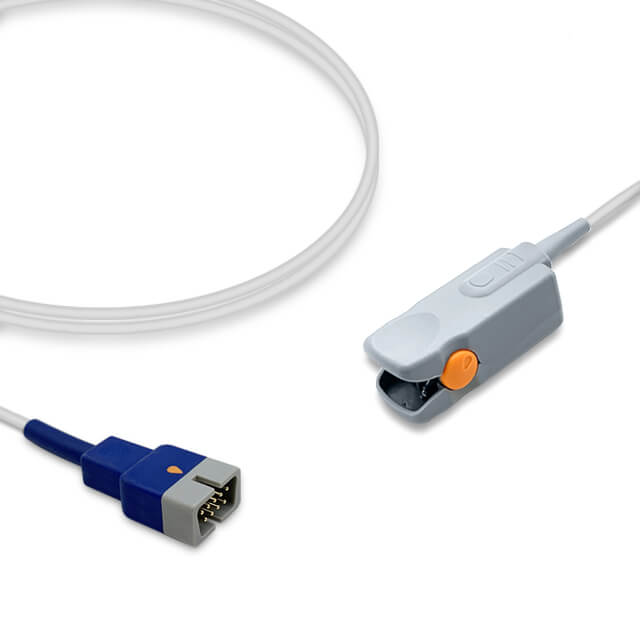
Reusable sensors are designed for longevity. Constructed with rugged housings, durable cables, and washable surfaces, they can withstand hundreds of patient uses with proper care.
Strengths:
- Cost efficiency over time: While a reusable sensor costs more upfront, the per-use cost drops dramatically after dozens or hundreds of cycles. For a telemetry unit monitoring patients daily, savings add up quickly.
- Durability: These sensors are engineered to handle repeated flexing, connection/disconnection, and routine disinfection.
- Sustainability: With far less waste than disposables, reusable sensors align with hospitals' environmental goals.
Limitations:
- Reprocessing requirements: Each sensor must be thoroughly disinfected according to the instructions for use (IFU). This demands staff time and compliance.
- Risk of cross-contamination: Any lapse in cleaning protocol increases infection risk, especially in immunocompromised patients.
- Fit challenges: Reusable clip-style sensors are not always appropriate for very small, fragile, or edematous digits.
Best Uses:
- ICUs and step-down units with strong infection-control infrastructure.
- Telemetry and med-surg floors where patient turnover is high and protocols are standardized.
- Outpatient or home-care settings where the same patient uses the device repeatedly.
Clinical insight: In one cardiac ICU, switching from single-use sensors to reusables saved over $50,000 annually. However, the hospital had a centralized disinfection unit that could guarantee compliance. Without that infrastructure, savings could have been offset by increased infection rates.
Disposable SpO₂ Sensors: Infection-Control Champions
Disposable sensors are intended for single-patient use. Most are made of flexible materials and come in adhesive wrap or foam styles.
Strengths:
- Infection prevention: By eliminating the need for reprocessing, disposables remove cross-contamination risk. This makes them ideal for high-risk patients or sterile environments.
- Excellent fit: Adhesive wraps are especially effective for neonates, pediatrics, and patients with irregular digits or poor perfusion.
- Workflow efficiency: Staff save time by simply discarding the sensor when it's no longer needed.
Limitations:
- Cost: Each new patient requires a new sensor, which can add up quickly.
- Supply chain dependency: Hospitals must ensure steady availability, particularly in high-volume units like the OR or NICU.
- Environmental impact: Disposable sensors contribute to medical waste.
Best Uses:
- Operating Rooms and procedural suites, where sterility is paramount.
- Emergency and trauma departments, where speed matters more than reprocessing.
- NICUs and PICUs, where fragile patients need delicate, single-use wraps.
- Transport/EMS, where reprocessing isn't feasible and durable disposables simplify logistics.
Clinical insight: A Level I trauma center adopted disposables in its ED after repeated issues with reprocessing delays. Staff satisfaction improved, and turnaround times dropped — but the supply chain team had to negotiate bulk purchasing to keep costs sustainable.
Quick Decision Guide by Setting
- NICU/PICU: disposable neonatal/pediatric wraps are safest and most accurate.
- ICU/Telemetry: reusable sensors for most patients; disposables reserved for isolation cases.
- Operating Rooms: disposable sensors streamline sterile workflow.
- EMS/Transport: rugged reusables with disposable backups for cold or high-turnover environments.
Compatibility: A Critical Overlooked Factor
Whether reusable or disposable, compatibility with the monitor is non-negotiable. SpO₂ sensors are not universally interchangeable. They must match the monitor's protocol family (e.g., Nellcor-style, Masimo-style, OxiMax-style).
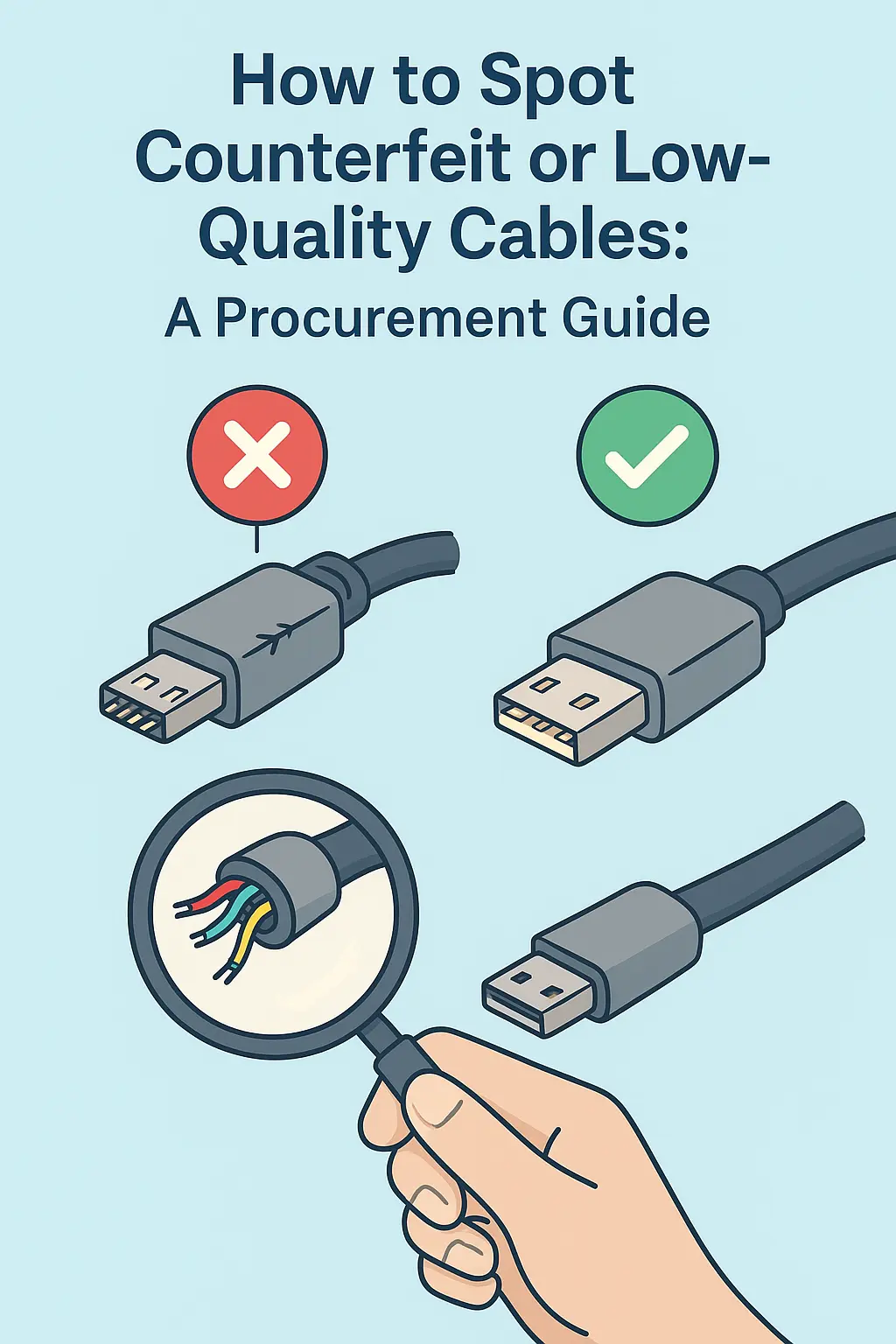
A common pitfall: purchasing a disposable sensor that "looks" compatible but fails to communicate properly with the monitor. Always verify by monitor brand and model, not just by connector shape. Procurement teams should maintain up-to-date cross-reference tables for every unit.
Best Practices for Reusable Sensor Care
For facilities using reusables, strong protocols protect both patients and investments:
- Follow IFUs carefully: Harsh solvents can cloud optics or damage adhesives.
- Inspect after every use: Look for cracked housings, peeling insulation, or clouded lenses.
- Track usage: Use inventory systems to log cleaning cycles and flag sensors for retirement after a defined lifespan.
- Train staff on proper handling: Rough flexing or pulling can shorten cable life.
By embedding care into workflows, hospitals extend the life of their sensors and reduce unexpected failures.
Training and Workflow Integration
A successful SpO₂ sensor strategy requires staff education and workflow design. Consider:
- Staff training: Ensure all nurses and techs know when to use disposables vs. reusables, how to clean reusables, and how to confirm compatibility.
- Unit-level quick guides: Laminated cards listing approved sensors for each monitor model reduce confusion.
- Compliance checks: Infection-control teams should audit cleaning practices for reusables.
- Procurement coordination: Supply chain managers must align ordering patterns with clinical needs.
Procurement Perspective: Balancing Cost and Care
Procurement teams face competing pressures: reduce costs while improving patient outcomes. Here's what they should consider:
- Hybrid approach: Many facilities save money and improve safety by using reusables for general monitoring and disposables for high-risk or procedural areas.
- Vendor reliability: Steady supply of disposables is critical. Always have a backup vendor approved.
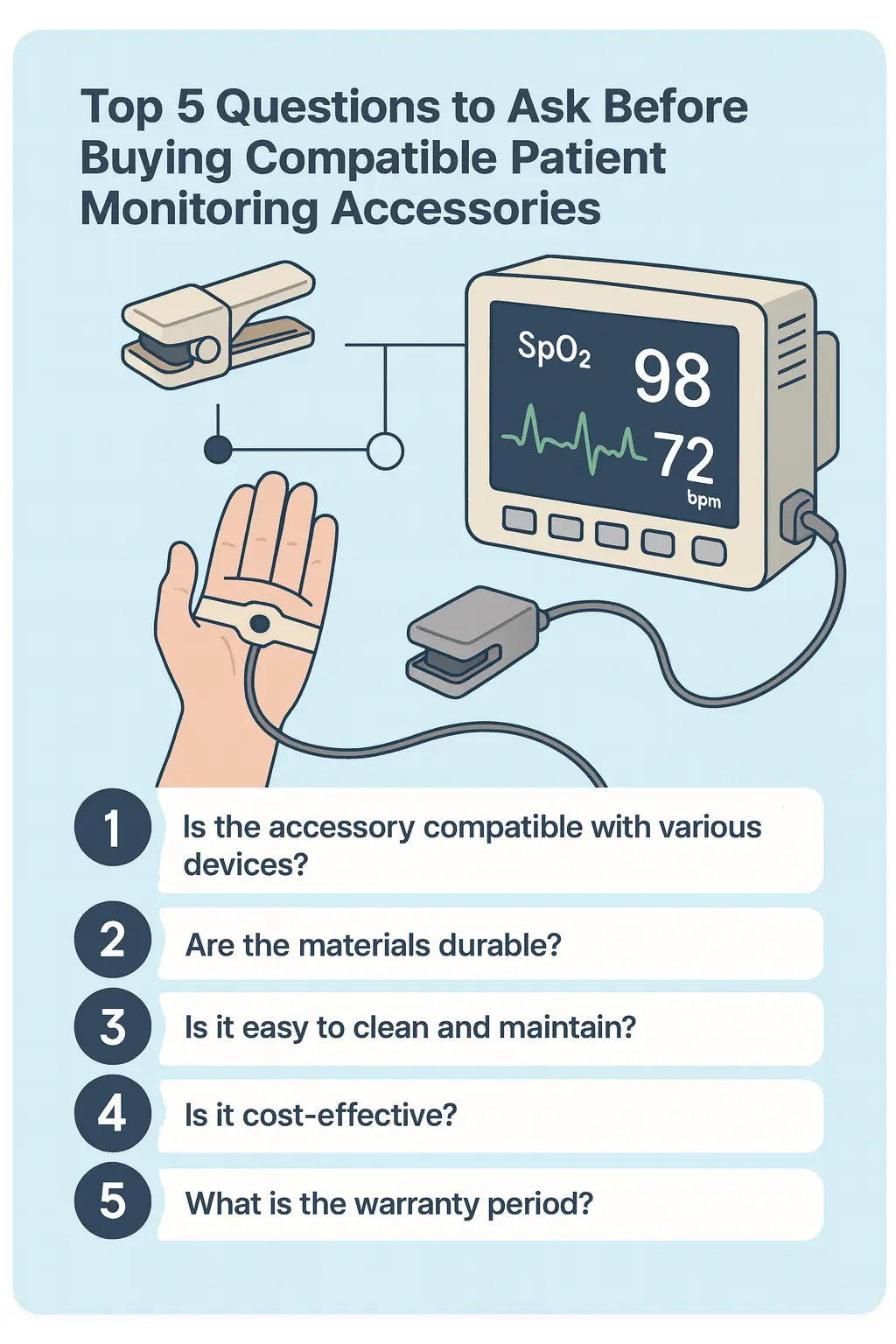
- Documentation: Request compatibility charts, ISO certification, and FDA/CE compliance documents for all sensors.
- Total cost of ownership: Factor in not just purchase price, but reprocessing labor, infection risk, and waste management.
Frequently Asked Questions
Q: Do disposable sensors give more accurate readings?
A: Not inherently. Accuracy depends on fit, perfusion, and correct placement. Both types can be accurate when used correctly.
Q: Can adult sensors be used for pediatric patients?
A: No. Pediatric and neonatal sensors are designed for smaller tissue volumes and unique physiological needs. Using adult sensors on children is unsafe and inaccurate.
Q: Why not go fully disposable?
A: Some hospitals do, but costs and waste rise sharply. A blended strategy often provides the best balance.
Q: How often should reusable sensors be replaced?
A: It depends on usage and reprocessing quality. Inspect daily, and retire at the first sign of degradation or reading drift.
Medten's Role in Safer Monitoring
At Medten, we understand that no two hospitals are alike. That's why we offer both reusable sensors for long-term cost efficiency and disposable sensors for infection-control and specialty populations. Every product is rigorously tested for signal quality, durability, and compatibility with leading monitor brands. By choosing Medten, facilities gain flexibility without compromising on patient safety.
Explore Our SpO₂ Sensor Solutions Here
Disclaimer
This content is provided for informational purposes only and does not constitute medical advice. Always follow your institution's protocols and manufacturer guidelines.