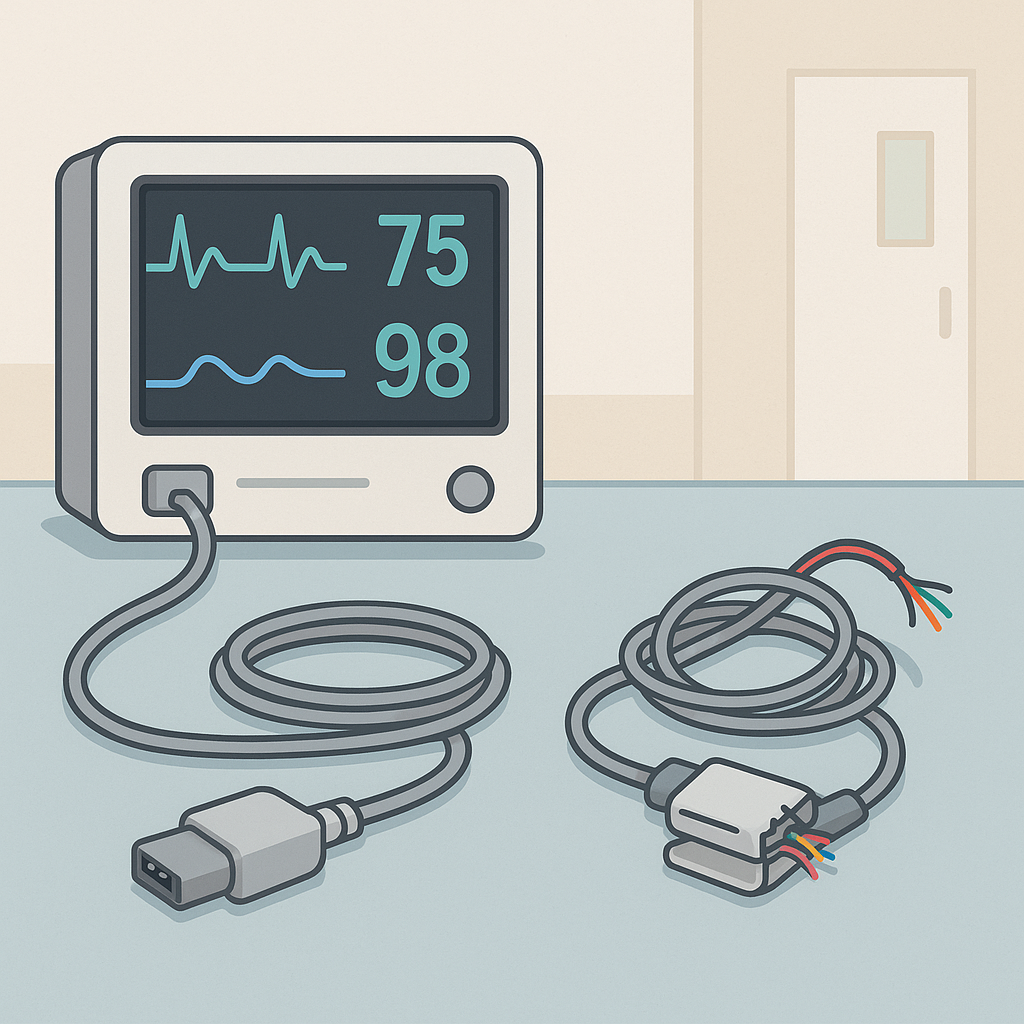
Introduction: Why Cables Matter More Than You Think
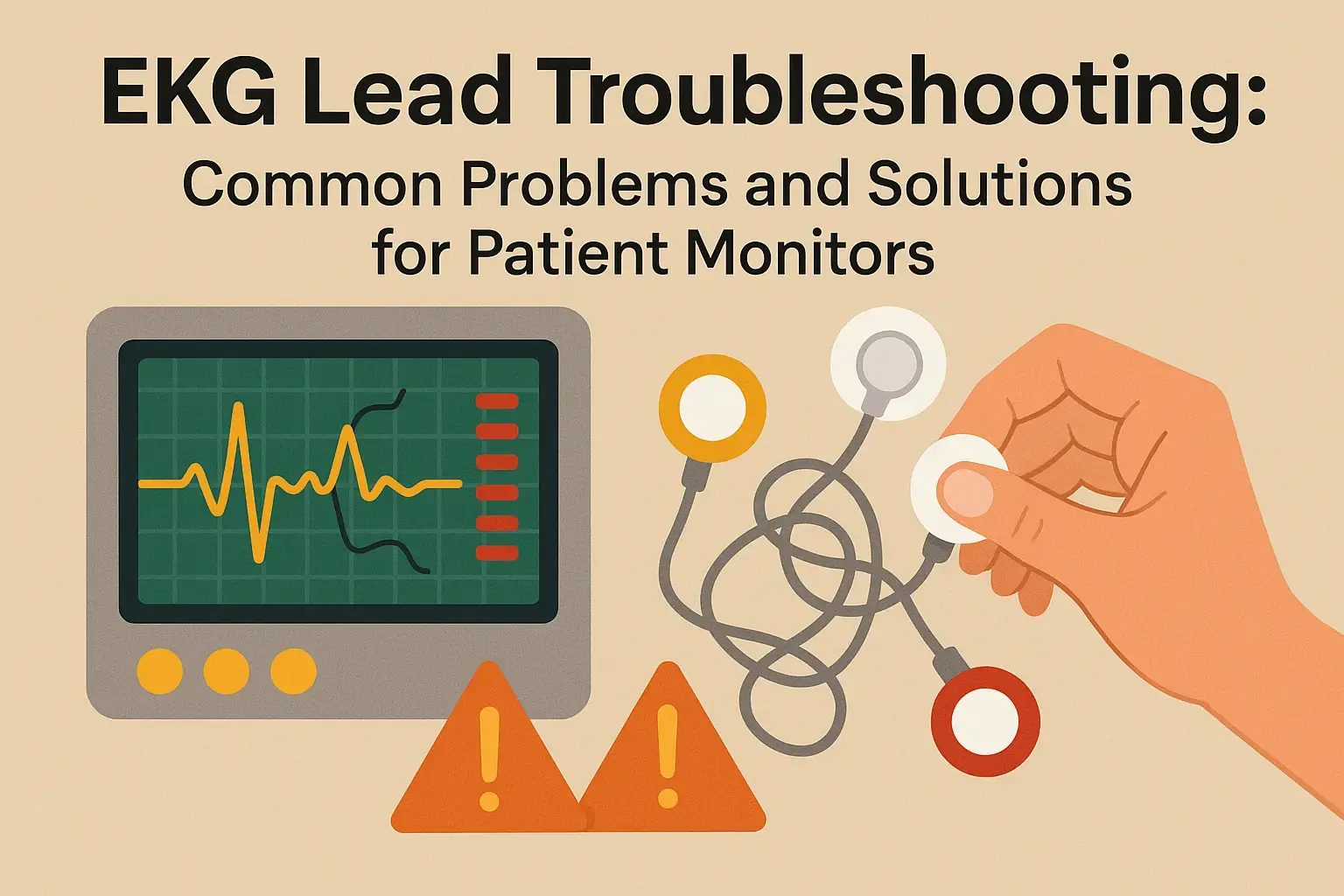
When clinicians think of patient monitoring reliability, the spotlight usually falls on the monitor itself. But in reality, the cables and connectors are the unsung heroes. These simple accessories form the physical bridge between patient and machine — and when they fail, the consequences are immediate. A frayed ECG leadwire, a loose SpO2 connector, or a worn-out NIBP hose can trigger nuisance alarms, produce distorted readings, or even mask critical events. The result? Increased risk for patients and wasted time for staff.
The good news is that most cable failures are entirely preventable. By combining routine inspections with smart replacement practices, hospitals can reduce downtime, control costs, and improve patient safety.
The Hidden Risks of Cable Failure
Even the highest-quality cables are consumables. With hundreds of connections, disconnections, and flex cycles each week, natural wear and tear add up quickly. The risks extend beyond "annoying alarms":
- Patient risk: damaged cables can mimic arrhythmias or hide true ischemic changes, delaying diagnosis.
- Staff burden: nurses and technicians spend precious time chasing false alarms and repeating tests.
- Operational cost: hospitals lose money through wasted electrodes, service calls, and unnecessary monitor replacements.
What looks like "just a cable" can actually be the weak link in patient safety.
Common Problems and Their Warning Signs
Most cable issues show themselves in repeatable ways. Learning to recognize the signs helps teams resolve problems faster:
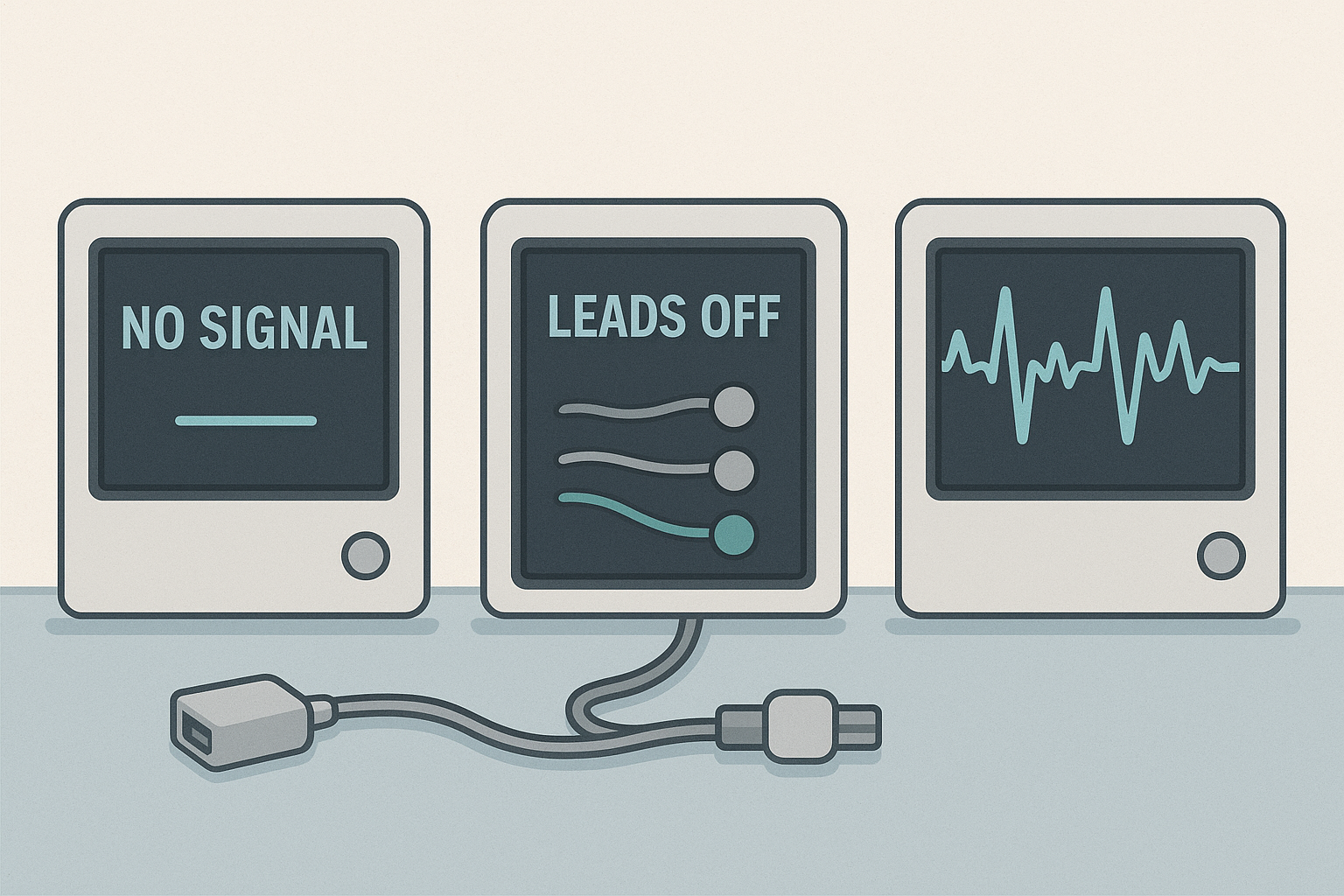
- Flatline or No Signal often points to a broken internal wire or a loose connection. The fix is usually a quick swap test with a known-good cable.
- Intermittent Signal is a classic symptom of internal fatigue. If flexing the cable causes the waveform to flicker, it's time to retire it.
- Noisy or Erratic Traces (Artifacts) are commonly caused by cracked insulation or poor routing near power cords. Reseating and rerouting often solve the issue — but if noise persists, replacement is safest.
- Visible Physical Damage, such as frayed jackets, exposed metal, or bent pins, is an immediate fail. These should be removed from service on the spot.
The 7-Step Cable Inspection Checklist
The fastest way to catch issues early is by building a repeatable inspection habit. Here's a quick 7-point routine that works across ECG, SpO2, and NIBP cables:
- Visual pass — Scan for cracks, kinks, frays, or jacket nicks.
- Connector check — Inspect pins for bending, rust, or debris; confirm the latch is secure.
- Strain-relief check — Examine the junction between cable and connector for splits or exposed conductors.
- Wiggle test — Gently flex the cable while watching the waveform; flicker suggests an internal break.
- Swap test — Replace with a known-good cable to isolate the issue.
- Route review — Ensure cables aren't tangled with AC cords that create interference.
- Labeling — Add purchase and inspection dates to every cable for lifecycle tracking.
By embedding this checklist into nursing huddles or biomed rounds, facilities can significantly reduce unexpected failures.
From Reactive Fixes to Preventive Maintenance
Too often, cables are replaced only after they fail in the middle of patient care. A preventive approach saves both time and frustration. Hospitals can:
- Label and track every cable with in-service and last-inspection dates.
- Set a replacement window — for example, replacing cables every 6–24 months, depending on use.
- Integrate checks into routine biomedical equipment rounds.
- Educate staff so frontline clinicians recognize the signs of wear and know when to escalate.
- Maintain spares of certified compatible accessories, ensuring downtime never delays care.
Replace or Repair?
It's tempting to patch or splice a cable, but in most cases, repair is not safe. Damaged insulation compromises electrical safety, while altered connectors can destabilize signals. The safer and often cheaper option is to replace it with a tested, certified compatible accessory. Sourcing from a trusted supplier ensures the replacement not only works seamlessly with your monitor but also meets regulatory standards for medical use.
How Medten Helps Safeguard Patients
Medten specializes in certified accessories built for the demands of real clinical environments. Our ECG, SpO2, and NIBP cables are engineered for durability, tested for signal integrity, and validated for compatibility with major patient monitoring systems. By working with Medten, hospitals get the best of both worlds: cost-effective replacements without compromising on safety.
Explore Our Compatible Cable Solutions Here
Frequently Asked Questions
Q: How often should cables be replaced?
A: Replacement depends on usage and environment. Busy ICUs may need to rotate cables every six months, while lower-traffic units may get up to two years. Always inspect at every use and replace at the first sign of wear.
Q: Are compatible cables as safe as OEM?
A: Yes, when they are manufactured under international standards such as ISO 13485 and FDA registration. Medten accessories are built to meet these standards, providing safe and reliable alternatives.
Q: Can faulty cables damage the monitor?
A: Yes. Loose or shorted connections can create stress on monitor input ports. Preventive replacement protects both patient and equipment.
Q: Why does noise increase when cables are routed near power cords?
A: Electromagnetic interference from AC power lines can cause artifacts. Always route patient cables separately from power cables.
Disclaimer
This content is provided for informational purposes only and does not constitute medical advice. Always follow your institution's protocols and manufacturer guidelines.