Introduction
Ordering the wrong patient monitor accessory can delay a repair, disrupt a department, and create unnecessary back-and-forth with purchasing. Many cables, sensors, probes, and repair parts look similar from the outside, but the right replacement depends on more than appearance.
To find the correct compatible patient monitor accessory, start with four details: the device brand, the device model, the OEM reference number, and the connector or cable photo. With those details, Medten can help match compatible patient monitoring accessories and biomedical repair parts faster.
Quick Answer: The Four Details You Need
Before requesting a quote, collect these details:
| Detail | Why It Matters | Where to Find It |
|---|---|---|
| Device brand | Compatibility often starts with the monitor or device manufacturer | Front label, back label, service manual |
| Device model | Similar devices from the same brand may use different connectors | Device label or equipment inventory record |
| OEM part number | Helps match a compatible alternative to the original accessory | Existing cable label, manual, purchase history |
| Connector photo | Confirms physical shape, pin layout, locking style, and wear | Take clear photos of both ends |
If you are not sure which part you need, send the device brand, model, OEM reference, and connector photos before ordering.
Step 1: Identify the Device Brand
Start with the original device or monitor brand. Common brands include GE Healthcare, Philips, Masimo, Nellcor, Nihon Kohden, Spacelabs, Draeger, Alaris, Baxter, Burdick, and others.
Brand matters because many accessories are built around brand-specific connectors, protocols, or model families. A cable that fits one patient monitor series may not fit another, even when the accessory type is the same.
Step 2: Confirm the Exact Model
The model number is often more important than the general product name. For example, two monitors from the same manufacturer may both support SpO2 or ECG monitoring but use different cable interfaces.
Look for the model number on:
- The device label
- The back or underside of the monitor
- The equipment asset tag
- The service manual
- Prior purchase records
- The existing cable or accessory packaging
When submitting a request, include the full model number exactly as shown.
Step 3: Check the OEM Part Number
OEM reference numbers are one of the fastest ways to identify the correct compatible accessory. The OEM number may be printed on the original part, listed in the service manual, or saved in your purchasing history.
When available, include both:
- The OEM reference number
- The existing compatible part number, if you have one
This helps prevent mistakes when several similar accessories exist for the same device family.
Step 4: Compare the Connector
Connector shape is important, but physical fit alone does not always confirm compatibility. Some accessories also depend on signal type, pin layout, cable configuration, patient population, or monitor technology.
Take clear photos of:
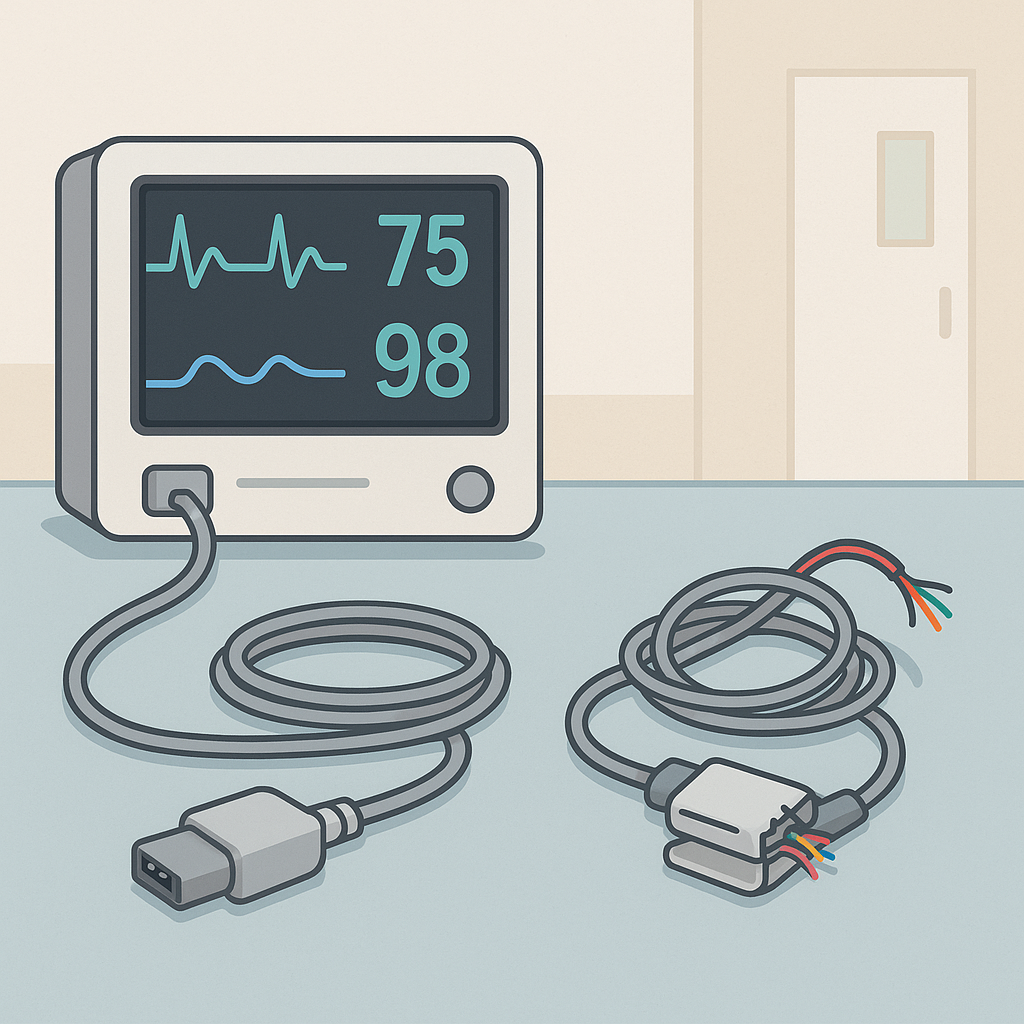
- The monitor-end connector
- The patient-end connector
- Any labels on the cable
- The full cable or accessory
- Visible damage or wear, if replacement is due to failure
For SpO2 accessories, confirm whether the monitor uses a specific technology or sensor family. For ECG accessories, confirm lead configuration and patient-end style.
Step 5: Confirm the Accessory Type
Patient monitoring accessories are not interchangeable across categories. Be specific about what you need.
| Accessory Type | Common Details to Confirm |
|---|---|
| SpO2 sensor | Adult, pediatric, neonatal, reusable, disposable, clip, soft, wrap, direct-connect, adapter cable |
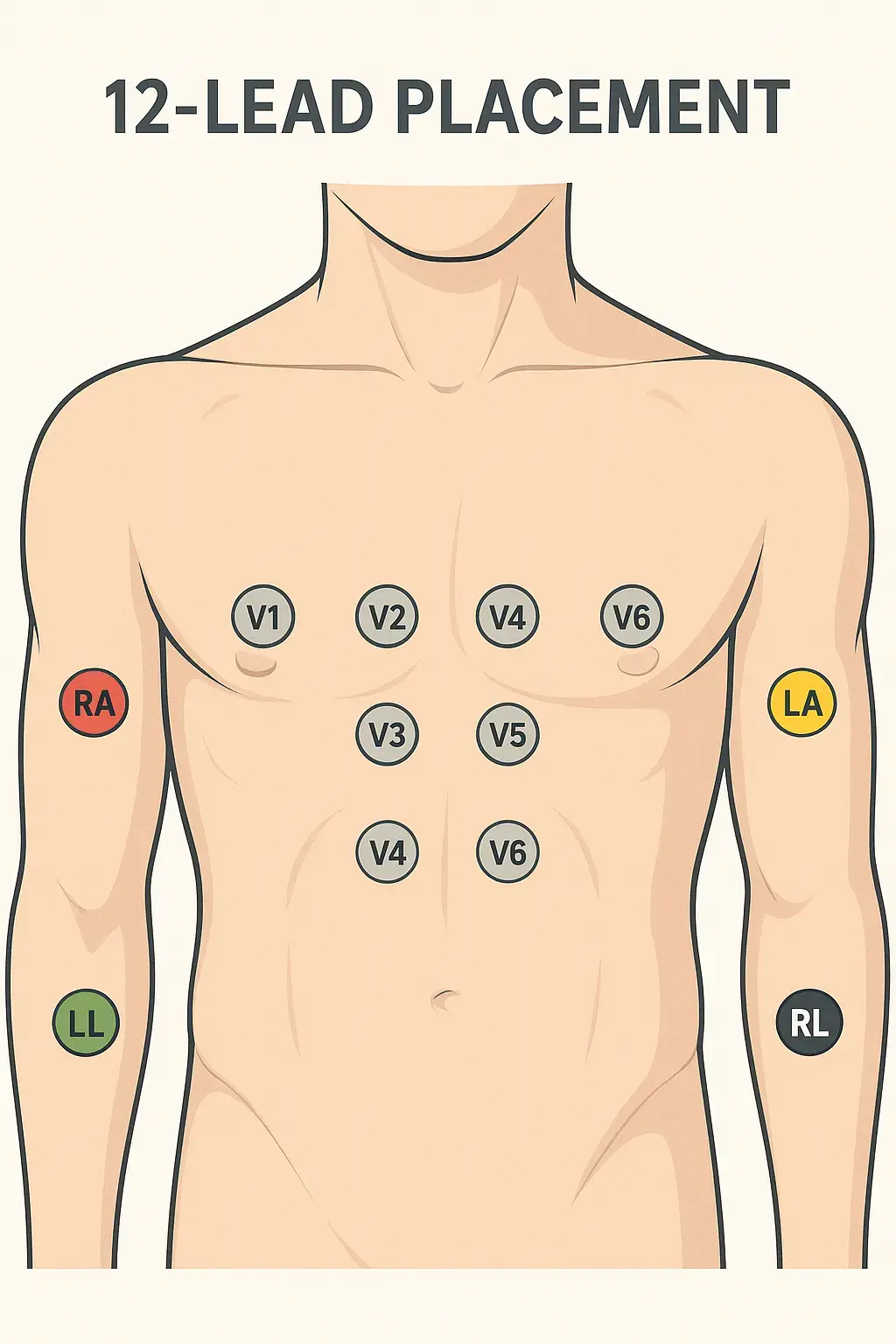
| ECG/EKG cable | 3-lead, 5-lead, 10-lead, 12-lead, trunk cable, leadwire, snap, clip, pincher |
| NIBP accessory | Cuff size, reusable or disposable, hose type, connector type |
| Temperature probe | Patient type, probe style, cable length, monitor compatibility |
| Fetal transducer | TOCO, ultrasound, DECG, leg plate cable, belt/attachment style |
| Battery or power part | Device model, voltage, chemistry, connector, OEM reference |
| Repair part | Device model, module type, exact part number, visual confirmation |
Why Compatible Accessories Can Be a Smart Choice
Compatible medical accessories can help facilities reduce cost while keeping essential equipment in service. Medten focuses on price-conscious, service-minded sourcing for high-quality biomedical repair parts and patient monitoring accessories.
The key is to confirm compatibility before ordering. A well-matched compatible accessory should be selected based on device requirements, OEM references, and the facility’s service procedures.
When to Ask for Help
Ask for compatibility support if:
- The original part number is worn off
- You have only the device model, not the accessory number
- The connector looks similar to another product
- You are replacing parts across multiple monitor brands
- The device is older or has multiple module configurations
- The accessory failed and you are not sure whether the cable or device is the problem
Internal Resources
- Search by Device
- Accessories category
- Repair Parts category
- Fetal Transducers category
- Batteries category
- Contact or Request a Quote
Final CTA
Not sure which compatible accessory you need? Use Medten’s Search by Device tool or send the device brand, model, OEM part number, and connector photos. Medten can help identify the right compatible option before you order.
Frequently Asked Questions
Can I use any compatible accessory if the connector fits?
No. Physical fit is only one part of compatibility. You should also confirm the device model, OEM reference, cable configuration, signal requirements, and patient type.
What if I do not know the OEM part number?
Send the device brand, model number, and clear photos of the existing accessory and connector. Medten can use those details to help identify compatible options.
Are compatible patient monitor accessories the same as OEM accessories?
OEM accessories come from the original equipment manufacturer. Compatible accessories are made to work with specific devices as an alternative option. Always confirm compatibility and follow your facility policies.
What photos should I send?
Send photos of the device label, both connector ends, any printed part numbers, and the full accessory. Clear photos reduce the chance of ordering the wrong part.
Can Medten help with repair parts as well as monitoring accessories?
Yes. Medten supplies compatible patient monitoring accessories and biomedical repair parts, including categories such as batteries, power accessories, fetal transducers, ECG/EKG accessories, SpO2 accessories, and selected repair parts.
Related Articles